Looking back at the ongoing search for better stabilizers in plastics, especially since the plastics boom of the twentieth century, chemists and manufacturers needed something more than ordinary antioxidants. Early on, alkylated phosphite compounds started showing up in technical literature, but diisooctyl phenyl phosphite came into real focus as polymer science demanded more resistant materials. This phosphite compound emerged as a stabilizer that brought improved resistance to oxidation, especially under heat and UV exposure. Much of its historical success came from the need to extend the lifespan of flexible PVC, a material integral to cables, films, and coated fabrics. The spread of household appliances, automotive wiring, and mass-produced consumer goods during the 1960s and 70s nearly guaranteed that any improvement in stabilizers had ripple effects, changing standards for everything from medical tubing to garden hoses. I remember reading case studies showing how entire supply chains improved from reduced yellowing and embrittlement, an outcome that people outside the industry rarely stop to consider. Progress here has real downstream impact—fewer failures, longer product use, less waste.
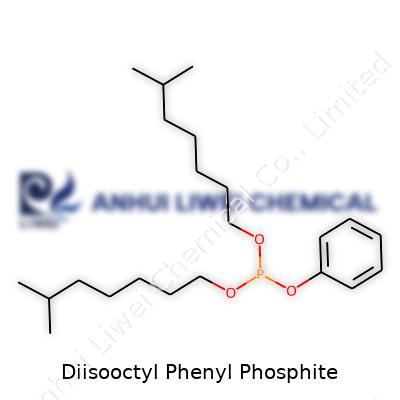
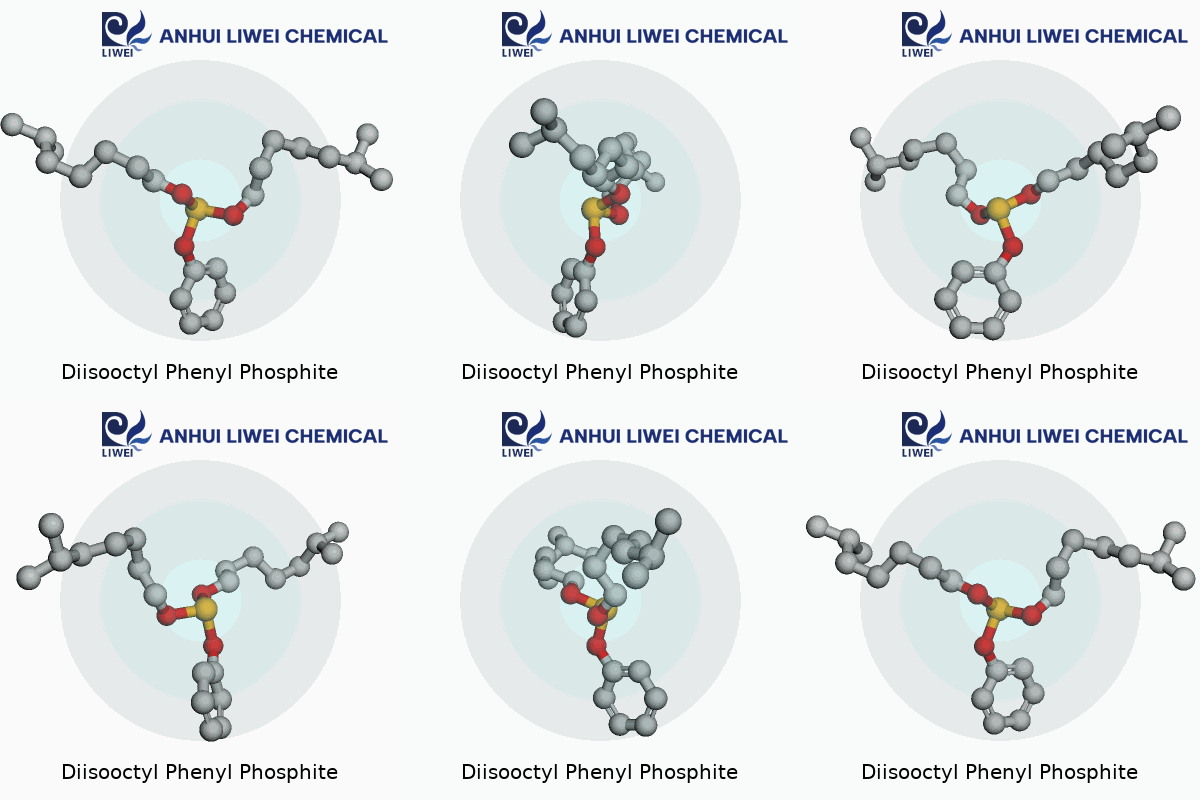
Diisooctyl phenyl phosphite is an organophosphite ester, usually recognized by its clear, oily liquid form and slight aromatic odor. The compound's molecular structure gives it strong electron-donating abilities, making it good at neutralizing free radicals that would otherwise break polymer chains. This property means that, even at low dosages, it can dramatically slow down the degradation of plastics. The molecular details matter since this isn't about simply dumping another ingredient in a mix; it’s about choosing a stabilizer that aligns with polymer matrices, resists migration, and holds up under thermal stress. Solubility in a variety of plasticizers and compatibility with both flexible and rigid PVC pushed this chemical into widespread use. Back in my university days, chemists often debated which stabilizer worked best for heat aging, but diisooctyl phenyl phosphite's track record always invited practical respect.
As a clear, slightly viscous liquid, the physical characteristics stand out for those of us who have handled dozens of additives in the lab. Low volatility reduces processing losses during extrusion and molding, keeping formulation costs down. It blends well with common plasticizers, which translates into efficient processing. Its stability under thermal and UV stress directly shapes product durability. This isn't theoretical; reports from accelerated weathering labs prove just how much better PVC wire jackets and clear films can last when protected by organophosphite stabilizers. The compound resists hydrolysis compared to unmodified phosphites, so products riding through humid storage or transport hold up with less breakdown.
Checking technical specs means more than flipping through datasheets; it’s about knowing what goes into the supply chain and how compliance requirements evolve. Diisooctyl phenyl phosphite goes by multiple CAS and EC numbers, but end-users focus on phosphorus content and acid value. Any out-of-spec batch can spell processing headaches or even regulatory flags if acid numbers run high. Labels outline required hazard information, safety precautions, and storage guidelines. Some years ago, a lab mishap with improper labeling was a huge setback for one of my colleagues—regulatory clarity saved time and money during audits. If there’s one thing the chemical industry teaches, it’s that precision on labels and consistent batch certification serve not only compliance officers but everyone down the line, right to consumers relying on safe, durable plastic products.
Synthesizing diisooctyl phenyl phosphite means navigating phosphorus chemistry, not just mixing ingredients. Producers react phenol and isooctanol with phosphorus trichloride, carefully controlling temperature, stoichiometry, and byproduct removal. This stepwise process includes washing and distillation to remove hydrochloric acid, unreacted alcohols, and color bodies that could compromise clarity or performance. The preparation method determines the compound’s purity, color stability, and ease of integration into plastic blends. It’s a reminder that large-scale chemical production involves getting not only the basic reactions right but also the downstream purification and handling. Anyone involved in formulation quickly learns how much the slightest variation in precursor quality can cascade into product performance changes.
One of the stories that rarely hit the mainstream concerns how this phosphite compound opens doors for custom modifications. Chemists often tailor esters and build more complex antioxidant systems using this as a building block. Adding secondary stabilizers or co-stabilizers can tune the material for flame-retardant properties or reduce color formation under heavy UV stress. Industrial R&D labs play with mixtures involving calcium-zinc stabilizers, epoxidized soybean oil, or tin-based systems to handle unique challenges, like food-contact approval or medical-grade clarity. The chemical itself can undergo transesterification or alkylation, further expanding its performance window for niche applications. Those incremental tweaks add up to major changes for products shoppers buy every day—from window frames to credit cards.
Navigating commercial supply sometimes feels like decoding a puzzle; diisooctyl phenyl phosphite appears under various synonyms and trade names depending on the region or supplier. Industry veterans talk about how confusing it gets, especially for new procurement staff or researchers scouring databases. Whether labeled as DIOP, DOOP, or by a string of registry numbers, the chemical's core value doesn't shift, but keeping track of naming conventions matters deeply for supply chain accuracy, regulatory checks, and compliance audits. I once traced a sourcing mismatch that wound its way back to a simple confusion over synonyms in export declarations. It's a reminder that chemicals don’t travel in a vacuum; global trade brings layers of language and labeling to every drum shipped.
Working with organophosphite stabilizers means strict attention to operational safety. The compound irritates skin and eyes, demands good ventilation, and calls for the use of gloves and goggles. Mishandling or poor storage—especially near oxidizers or acids—can trigger decomposition and off-gassing. Labs and factories focus on spill protocols, fire prevention, and training operators not to underestimate the risks of repetitive exposure. Occupational limits show up in safety data sheets for a reason. Years on the production floor reinforce how easily overlooked hazards creep into day-to-day routines, risking both people and products. Prompt cleanup, regular safety drills, and clear documentation keep incidents rare and manageable.
Diisooctyl phenyl phosphite protects flexible and rigid PVC, polyester resins, synthetic rubber, and other polymers found in consumer and industrial products. The wiring in your house, the coating on your garden hose, and the soft floors in gyms may all owe some of their resilient properties to this stabilizer. Outside of mainstream plastics, some formulations show up in adhesives, sealants, and lubricants where the compound’s antioxidative properties keep systems running longer. The move toward non-phthalate and lead-free stabilizer solutions pushed this chemical into new niches, fitting the changing landscape of safer consumer products. This is one of those ingredients people never see directly but rely on every day.
Research never pauses for long, and the academic community keeps studying diisooctyl phenyl phosphite's environmental persistence, its synergy with other stabilizers, and new ways to upgrade processing efficiency. Labs investigate residue migration in food-contact materials and search for substitutes with lower toxicity or improved biodegradability. The trend toward green chemistry means formulating blends that hit stricter safety targets without losing performance. Industry collaborations often focus on making the chemical more compatible with next-gen bioplastics or recycling workflows. Success here can set new benchmarks for the circular economy. Seeing these developments firsthand at technical conferences, I sense how much chemists care about bridging top-notch stabilizer function with a future-focused environmental ethic.
Toxicity research on diisooctyl phenyl phosphite reflects the push from both regulators and end-markets for transparency. While animal testing suggests a low risk profile at typical usage levels, scrutiny increases for applications in contact with food, children’s toys, and medical equipment. Regulatory authorities in different countries enforce exposure limits and migration thresholds. The chemical's breakdown products and their long-term impact on environmental and human health receive ongoing attention. I remember regulatory reviews where small changes in allowable content levels had massive ramifications for product re-certification. Any hint of bioaccumulation or adverse metabolic effects sparks a coordinated response along the supply chain, from raw material suppliers to finished goods certifiers.
Looking forward, diisooctyl phenyl phosphite faces a crossroads between staying relevant in conventional plastics and adapting to new materials with tougher safety and environmental rules. Demand will likely hold steady where it outperforms alternatives or where cost pressures keep innovation at bay. Yet, as policymakers push for chemicals with greener profiles and lower migration, the pressure mounts for producers to develop new derivatives or discover replacements that keep up with changing standards. Industry insiders talk about how advancements in process technology, like continuous flow reactors or greener synthesis routes, could cut waste and unlock new performance benchmarks. Cross-industry partnerships and regulatory harmonization can smooth the way for safer, more sustainable stabilizers. Continued investment in life-cycle analysis, real-world exposure monitoring, and open data sharing matters more than ever. The quest never ends for the right balance between safety, stability, cost, and environmental stewardship in our everyday materials.
Most people never hear about diisooctyl phenyl phosphite. It sounds like something that belongs in a lab far away from regular life. Truth is, this chemical shows up almost everywhere. From grocery bags to electrical cords to the dashboard trim of your car, diisooctyl phenyl phosphite keeps plastics from breaking down too soon. It isn't a superstar for the average shopper, but companies and workers who make, handle, or use plastic goods come across it all the time.
Plastic might look and feel solid, but without help, it loses its edge pretty fast. Sunlight, heat, oxygen—these all attack plastics. Over time, they turn brittle, discolored, or even start to crumble. Diisooctyl phenyl phosphite works like a shield, mostly as an antioxidant stabilizer. During the processing of plastics (especially PVC), heat and friction spark off chemical reactions that chew up the material. This stabilizer grabs the worst troublemakers—peroxides and free radicals—and neutralizes them before they can do much harm.
The plastics industry puts real trust in this chemical. Outdoor playground equipment, wire coatings, paint films, or even flooring tiles—they rely on protective additives like this to last longer, stay flexible, and keep colors from fading. If the stabilizer fails or gets left out, the final product won’t stand up to normal use, let alone tough conditions.
Some folks worry whenever they see a long chemical name. That concern isn’t out of place given how much plastic surrounds us. Based on what the science says, responsible use of diisooctyl phenyl phosphite does not cause the big safety horrors like carcinogenicity, provided manufacturers follow the best practices. Regulatory agencies keep a close watch, and industry guidelines require limits on how much can go into food-contact plastics. Still, it makes sense to handle it with care. Factory workers and folks at recycling plants benefit from gloves, good ventilation, and regular safety checkups to avoid long-term exposure.
People count on plastic for lightweight packaging, medical devices, and ways to save energy in transportation. Those aren't going away soon. At the same time, consumers and governments push for greener chemistry. Researchers look for plant-based additives and smarter recycling methods to ease the pressure on both health and the planet. Some companies try to cut out as many chemical additives as they can by switching to more stable polymers, or by improving production methods so plastics don't wear out as quickly.
It’s easy to dismiss all “plastic chemicals” as bad news. Practical experience says it’s more complicated. Diisooctyl phenyl phosphite works behind the scenes to keep products reliable, safe, and affordable. The real challenge is figuring out how to keep that usefulness, while clearing the path for safer, more sustainable solutions. Conversations between scientists, manufacturers, policy makers, and the public help push progress. Blind fear rarely solves anything, and neither does ignoring the details.
Everyday people care more than ever about what goes into the things they use. Open access to chemical safety data, honest labeling, and well-funded research shine a light on risks and trade-offs. Communities, not just companies, deserve a full say in decisions about what chemicals touch their lives. That shift would mark a healthy step forward—one that balances the benefits of durable goods with the urgent need for safer materials in the long run.
You hear a lot about chemicals these days. People worry—and often for good reason. Diisooctyl Phenyl Phosphite pops up often in manufacturing, especially in plastics, as a stabilizer. It keeps products from breaking down under heat and sunlight. A lot of folks working in industries that rely on additives feel pressure to handle new materials quickly and efficiently. But with specialty chemicals like this one, there’s more to think about than just the job at hand.
Diisooctyl Phenyl Phosphite doesn’t scream “danger” the way some chemicals from school lab days do. It usually comes as a clear, oily liquid, with almost no smell. Still, its safety gets questioned for a reason. My own take, based on reviewing available toxicity studies: this compound stays off any major blacklist when handled with average workplace safety rules.
Too many reports downplay or exaggerate the risks of organic phosphites. Problems don’t jump out right away unless someone neglects basics—like gloves, eye protection, or proper ventilation. I remember an old colleague in a molding plant who didn’t take time for PPE, got a bit of skin irritation, and joked it off. Pretty soon, everyone else skipped their gloves too. Incidents like this don't always make the news, but they lead to habits that can bite back, especially if spills or accidental contact build up over time.
Checking guidelines from big organizations helps clarify things. Occupational Safety and Health Administration and the European Chemicals Agency do not classify Diisooctyl Phenyl Phosphite as acutely toxic. Still, these bodies recommend routine controls: minimize direct contact, limit inhalation of vapors if heated, and use protective gear during spills or large-scale transfers. In work environments under pressure to boost output, these steps get skipped more often than anyone admits. Under high temperatures or fire, phosphites can break down and release hazardous fumes. Forgetting that risk means putting workers in harm’s way.
Smart organizations invest in regular, honest training. Instead of flooding workers with dense, unread safety sheets, they run hands-on demonstrations and point out trouble spots in actual workspaces. I’ve seen supervisors step up by keeping contamination kits well-stocked and reminding people to change gloves between messy tasks, not only for the sake of regulations, but because everyone wants to go home healthy. Good air movement through exhaust fans or even portable units can cut down on vapor risk.
Another piece comes from keeping lines open between workers and management. When someone notices an odd reaction—maybe a rash or cough after working around a new batch—they speak up. There’s no shame in bringing attention to recurring issues, because even low-level exposure over long periods takes a toll nobody calculates until years later.
No one expects Diisooctyl Phenyl Phosphite to show up in headlines, but treating it with respect means fewer missed work days and a safer environment all around. Calling out small things that add up—cut gloves, half-open chemical containers—keeps bad news from snowballing. In the end, real safety depends on every person at the bench, not just a bullet point on a safety chart.
Standing in the middle of a crowded hardware store, few people glance twice at the bottles and pipes that line the shelves. Yet, behind that shelf life and flexible shine sits a quiet workhorse from the world of chemistry: Diisooctyl Phenyl Phosphite. Years ago, my own curiosity about what kept vinyl garden hoses soft through winter led me deep down a rabbit hole of plastic additives. This journey revealed more than technical jargon. It opened my eyes to the layers of protection and preservation at play in everyday products.
Polyvinyl chloride, better known as PVC, would crumble and turn yellow under sunlight without the help of stabilizers. Diisooctyl Phenyl Phosphite steps up, not as a hero in a cape, but as a shield inside the material. It fights off heat, light, and oxygen, keeping plastics from breaking down long before they outlive their usefulness. Anyone who has pulled an old wire or cable from a basement and found it still supple and free from cracks owes something to this phosphite and its cousins.
The substance doesn’t act alone. It teams up with other stabilizers, almost like a support cast in a play. On its own, it slows oxidation—the silent chemical process that can make plastics lose both shine and strength. When paired with metal soaps and organotin compounds, it draws out the life of hoses, electrical insulation, and vinyl records. That’s not only good for product longevity but keeps replacement costs from stacking up at the consumer’s end.
For anyone who’s ever noticed the slow darkening of engine oil over months, the same principle applies. Oils, especially those exposed to heat in engines or turbines, crave antioxidants. Diisooctyl Phenyl Phosphite steps into that role, fighting varnish and sludge. The result: cleaner machinery, fewer breakdowns, and longer stretches between oil changes. Industrial plants and auto shops have relied on such compounds for smoother runs and lower maintenance bills.
A walk through the supermarket shows rows of plastic wrap covering cheese and deli meats. Regulations don’t allow just any additive in these materials. Phosphite stabilizers, including the one at the center of this story, land in some food-contact plastics because they don’t easily break down, and the migration risk stays low. Food safety remains a concern, though. Decades of testing and ongoing reviews by health agencies aim to keep exposure within safe boundaries. Constant oversight feels right, especially as we wrap more of our fresh food in flexible films.
No discussion is complete without some reflection on the future. Diisooctyl Phenyl Phosphite stands out today, but industry pushes for alternatives that produce less waste, stick around less in the environment, and carry even lower toxicity. The quest for such replacements steers researchers back to the drawing board, with every breakthrough raising the bar for what additives can achieve. From my own perspective, seeing these efforts tells me the chemical industry is listening to calls for safer, cleaner materials without giving up on performance. The next time I pick up a garden hose or plug in an old appliance, I remember the unseen guardians inside—and the scientists reaching for the next big breakthrough.
Anyone who’s spent time working in plastics or additives eventually crosses paths with chemicals that don’t roll off the tongue. Diisooctyl Phenyl Phosphite—C24H39O3P, known by its CAS number 25550-98-5—fits that bill. On the surface, this is one of those industrial compounds quietly coursing through supply chains. It plays a key role in stabilizing plastics, yet most people who handle everyday PVC products never hear its name. That disconnect between frontline chemistry and community awareness keeps the chemical world shrouded in mystery for many.
From seeing granules dropping through an extruder to reading regulatory documents, knowing the exact chemical identity matters. Ask anyone who’s tried to trace safety information or dig up performance data: the difference between a generic plasticizer and Diisooctyl Phenyl Phosphite isn’t just academic. That formula, C24H39O3P, lets researchers and safety managers trace data through scientific literature, regulatory filings, and databases that keep workplaces safe. The CAS number does more than identify a compound—it connects a factory batch in one country to paperwork and standards worldwide. Without that anchor, conversations about risks or improvements fall apart.
Polyvinyl chloride, or PVC, bends and resists cracking thanks in part to stabilizers. Diisooctyl Phenyl Phosphite works as an antioxidant, helping plastics hold up under heat and light. That fact matters whether you’re working in processing plants or managing waste streams. Over the years, rules for additives in children’s toys, food packaging, and medical devices have grown stricter, motivated by concerns about what migrates from plastic into people. Tracking formulas and CAS numbers keeps companies honest and helps watchdog groups dig into what goes into consumer products. Supply chain transparency leans on clear chemical identification.
I’ve seen what happens when a chemical gets misidentified. Workers end up following the wrong safety measures. Regulators miss contamination risks. That extra digit in a CAS number isn’t filler—it sends folks to the right safety sheets and scientific studies. Mix up the details, and a well-meaning manufacturer could end up on the wrong side of the law or, worse, endanger staff. I remind people that chemical names and numbers aren’t just paperwork; they’re a bridge between chemistry and health. A small slip in documentation can unravel years of risk management.
One step that improves things? Wide sharing of verified chemical identities. Open, searchable databases and regulatory support make a difference. It helps procurement staff, emergency responders, and lab techs check quickly and spot errors before they cascade. Training counts, too. Everyone from operators on the floor to middle managers needs to know that a number like 25550-98-5 is as important as the batch number on a label. That shift in mindset closes the gap between chemical manufacturers and end-users, weaving knowledge into every link of the supply chain.
Clear, honest information is the backbone of trust in chemical safety. Long, tricky names fade into routine for veterans in the field, but newcomers benefit from clear communication too. By recognizing the significance of precise chemical data, industry can dial down risks and dial up confidence, giving everyone from engineers to parents real insight into what goes into everyday materials.
Anyone who’s spent even a day in chemical storage knows certain materials deserve a little more respect, not just for personal safety but for community health. Diisooctyl Phenyl Phosphite fits in that category. I remember walking into a warehouse years ago, and the pungent smell in the air gave away that someone had taken a shortcut with chemical storage. That experience stuck with me. Even though this chemical serves industries well—as an antioxidant and stabilizer in plastics—it’s clear mishandling has its price. Respiratory irritation or long-term health concerns rarely announce themselves right away.
There’s a lot more to safe storage than locking up the drums in a back room and hoping nobody messes with them. Diisooctyl Phenyl Phosphite prefers a cool, well-ventilated space. Heat and sunlight do it no favors. If you’ve ever left paint in a hot shed, you know why: volatile compounds react, materials break down, and a simple job can turn complex.
Humidity creeps in, too. Moisture gets aggressive, causing certain chemicals to break down or behave unpredictably. You don’t want to wake up to leaky containers. Metal containers can rust from the inside out, so picking non-reactive storage—glass or lined steel—pays off.
I’ve seen warehouses cut corners by stacking everything close to heaters in winter, then troubleshoot spills in spring. Proper storage isn’t fancy—distance from direct heat, daily checks for leaks, and making sure lids always seal tight. It doesn’t take fancy tech to keep chemicals safe, just daily care and a willingness to fix small problems before they turn big.
Getting chemicals from A to B is where most people get tripped up. Roads get bumpy, traffic slows down, and someone in a hurry might ignore that upright position label. If you ever watched a barrel tip and leak in the back of a truck, you already know why orientation matters. Secure drums with straps, keep loads stable, and don’t overload vehicles. Common sense beats speed—every time.
Transportation laws exist for a reason, and hazardous chemicals draw attention from both regulators and first responders. If a truck overturns and a spill happens, neighbors get worried, reputations suffer, and the paperwork is endless. It’s cheaper to double-check each load than to clean up later. Good practice means using placards, keeping paperwork on hand, and giving drivers clear instructions about what they’re moving.
Real-world experience shows: Routine beats improvisation. Keeping material safety data available to everyone in the process gives peace of mind and helps in emergencies. Truckers and handlers need clear lines of communication with dispatchers and site managers, so delays or emergencies don’t spiral out of control.
Maybe it’s easy to ignore the big picture, but each step in storing and transporting chemicals like Diisooctyl Phenyl Phosphite touches more lives than just those on the company payroll. Locals count on businesses to take these responsibilities seriously. Mistakes don’t only cost money—they erode trust.
Facing these requirements with open eyes and steady hands isn’t paperwork for its own sake. It’s the difference between a safe, respected operation and a business that risks long-term fallout. Every careful move protects not just property, but people.